
Most lenders want a credit score of 620 to 680, with 660 or higher earning better pricing, along with a home equity share typically of around 15 to 20 percent and a debt-to-income ratio commonly near or below 43%. If you meet those three benchmarks and can document steady income, you have a realistic shot at approval. Start by pulling your credit report and estimating your loan-to-value ratio before you apply.
TL;DR:
- A credit score of at least 620 to 680 is needed, with scores above 660 usually securing better rates, especially if combined with strong debt-to-income ratios.
- Home equity and loan-to-value ratios are critical, with typical CLTV limits between 80 and 85 percent, requiring 15 to 20 percent in home equity.
- Documented income history of two years is standard, with self-employed borrowers needing additional tax and profit-loss documentation.
- Lenders estimate potential payments based on full credit line utilization and project worst-case scenarios during underwriting.
- Upfront costs include fees for appraisal, application, and title, with ongoing fees potentially adding to the total cost, so comparing total charges is essential.
Table of Contents
- Eligibility: Credit Score, Equity, Debt-to-Income, and Income
- Documentation Lenders Will Ask For
- How Lenders Underwrite a HELOC Application
- Appraisal, Valuation, and Property Requirements
- Upfront and Ongoing Costs to Expect
- Draw Period, Repayment Period, and Payment Risk
- Federal Disclosures and Rescission Rights Borrowers Should Know
- When HELOC Interest Is Tax-Deductible
- When to Call a Mortgage Broker About a HELOC
- How David Mordue Can Help With Your HELOC or Refinance
- Sources
- FAQ
Eligibility: Credit Score, Equity, Debt-to-Income, and Income
Lenders look at four numbers before anything else, and each one carries its own threshold.
Your credit score sets the tone for the entire application. Scores generally in the range of 620 to 680 may qualify with some lenders, with improved approval odds and pricing often seen with scores above 660, according to Consumerfinance, which lists creditworthiness among the key criteria lenders review.
Equity works alongside your score. Lenders calculate combined loan-to-value (CLTV) by adding your existing mortgage balance to the HELOC amount and dividing by your home’s appraised value and property valuation.

Debt-to-income ratio is the third pillar. Lenders often use a 43% debt-to-income ratio guideline, a benchmark widely applied in mortgage underwriting according to ConsumerFinance.gov’s explanation of debt-to-income ratios. They calculate this by dividing your total monthly debt payments, including an estimated HELOC payment, by your gross monthly income.
Income stability rounds out the picture. Salaried borrowers typically need two years of consistent employment history, while self-employed applicants face closer scrutiny of tax returns and profit-and-loss statements.
- Credit scores of 620 to 680 are commonly accepted, with 660+ often required for the best rates.
- CLTV limits usually fall between 80% and 85%, leaving 15% to 20% in required equity.
- DTI near or below 43% is the typical underwriting guideline.
- Two years of income history is standard, with extra documentation for self-employed borrowers.
Pro Tip: Use a mortgage calculator to estimate your CLTV and DTI before you apply, so you know where you stand ahead of time.
Documentation Lenders Will Ask For
Gathering these documents ahead of time can shorten your approval timeline considerably.
- Proof of income: recent pay stubs, W-2s, and two years of tax returns, or profit-and-loss statements if you are self-employed.
- Current mortgage statement showing your remaining balance and payment history.
- Proof of homeowner’s insurance and recent property tax statements.
- Bank and investment statements that show reserves and overall financial stability.
- Signed authorization allowing the lender to pull your credit report and process your application.
Having these ready before you submit an application keeps the underwriting process moving instead of stalling on paperwork requests.
How Lenders Underwrite a HELOC Application
Underwriting a HELOC follows a similar process to a mortgage, with a few extra wrinkles tied to variable payments.
Lenders calculate your DTI by estimating what your HELOC payment would look like once the line is open, then adding that figure to your existing debts. Because the balance starts at zero, they typically assume a percentage of the credit limit to project a worst-case monthly payment.
Your credit report gets a close read, too. Underwriters look for recent late payments, collections, and the overall length of your credit history, all of which affect which score band you fall into and the rate you’re offered.
- Underwriters estimate a projected payment on the full credit line, not just what you plan to draw.
- Recent late payments or collections can outweigh an otherwise strong score.
- Low CLTV, cash reserves, or a co-borrower can offset a weaker DTI or credit profile.
- Self-employed applicants should expect requests for additional tax documentation and proof of business stability.
Pro Tip: If your DTI is borderline, ask your lender whether a slightly lower credit limit request would bring your projected payment within range.
Appraisal, Valuation, and Property Requirements
Your home’s appraised value directly determines how much equity you have to borrow against, so lenders take this step seriously.
Many lenders order a full interior appraisal, though some use a desktop review or automated valuation model for lower-risk loans. For certain higher-priced transactions, the CFPB’s HPML appraisal rule guidance requires a licensed or certified appraiser to complete an interior inspection and follow additional steps for recently resold or flipped properties.
Appraisers must comply with the Uniform Standards of Professional Appraisal Practice (USPAP) and FIRREA requirements, and you have the right to receive a copy of the completed appraisal report.
- Interior appraisals are common for HELOCs, though desktop reviews are used in some lower-risk cases.
- Licensed or certified appraisers are required under federal guidance for covered higher-priced loans.
- You’re entitled to a copy of your appraisal report once it’s complete.
- Clean, well-maintained comparable homes in your area tend to support stronger valuations, so tidy up before the appraiser arrives.
Upfront and Ongoing Costs to Expect
HELOC pricing goes beyond the interest rate, so comparing total cost matters as much as comparing APR.
Upfront costs often include an appraisal fee, an application fee, and title or closing charges, depending on the lender and your state. Some lenders waive these fees to stay competitive, which can shift how you compare one offer against another. Ongoing costs may include annual maintenance fees or inactivity fees if you don’t draw on the line regularly.
- Appraisal, application, and title fees are the most common upfront charges.
- Annual or inactivity fees can add up if you leave the line unused for long stretches.
- Fee waivers vary by lender and should factor into your overall cost comparison, not just the advertised APR.
- Ask for an itemized loan estimate so you can compare offers fee by fee, not just rate by rate.
Draw Period, Repayment Period, and Payment Risk
A HELOC operates in two distinct phases, and understanding both protects you from payment surprises.

During the draw period, which commonly lasts around 10 years, you typically make interest-only payments and can borrow and repay repeatedly, as described in the CFPB’s HELOC brochure. Once the repayment period begins, payments usually convert to principal and interest, which can raise your monthly bill substantially. Some borrowers choose to refinance or convert their balance to a fixed-rate loan before that shift happens.
Lenders also reserve the right to freeze or reduce your credit line if your home’s value drops or your credit profile weakens, a risk the CFPB brochure specifically flags for borrowers to watch.
- Draw periods are often interest-only, while repayment periods typically require full principal and interest payments.
- A declining home appraisal or a drop in your credit score can trigger a line reduction or freeze.
- Keeping cash reserves on hand helps absorb a payment increase if your line is cut.
- Talk to your lender well before your draw period ends to understand your options.
Pro Tip: Check your HELOC’s variable-rate terms against a fixed-rate alternative a year or two before your draw period ends, so you aren’t deciding under pressure.
Federal Disclosures and Rescission Rights Borrowers Should Know
Federal rules give HELOC borrowers specific protections, and knowing them helps you compare offers with confidence.
Lenders must disclose the APR, variable-rate terms, and payment structure before you pay any nonrefundable fees, per the CFPB’s HELOC brochure. You also have the right to cancel the transaction within three business days of closing without penalty, a protection built into federal lending law.
- Lenders cannot collect nonrefundable fees until required disclosures are delivered.
- You have three business days after closing to rescind the loan without cost.
- You’re entitled to a copy of your appraisal report upon request.
- HUD-approved housing counselors are available if you want independent guidance before signing.
When HELOC Interest Is Tax-Deductible
The tax treatment of HELOC interest depends entirely on what you do with the money.
Under IRS Publication 936, interest is deductible only when the funds are used to buy, build, or substantially improve the home securing the loan, and only within applicable acquisition debt limits. Using your HELOC for personal spending, debt consolidation, or anything unrelated to your home generally disqualifies the interest from deduction.
- Interest is deductible only for home-related uses such as renovations or improvements.
- Personal expenses or debt consolidation typically don’t qualify.
- Keep detailed records of how you use the funds, and talk to a tax professional before filing.
When to Call a Mortgage Broker About a HELOC
A broker earns their value when your situation isn’t straightforward: self-employed income that needs extra packaging, an appraisal dispute, or a tight funding timeline. A good broker handles documentation, compares rates across lenders, and keeps the process moving so you aren’t managing it alone.
— David Mordue
How David Mordue Can Help With Your HELOC or Refinance
If gathering documents and comparing lenders feels like more than you want to handle alone, that’s exactly where brokered help makes a difference. Brokered mortgage services may offer a fully online application process, expert rate comparisons across lenders, and personalized consultations that guide you through required documentation, sometimes enabling funding in a shortened timeline.
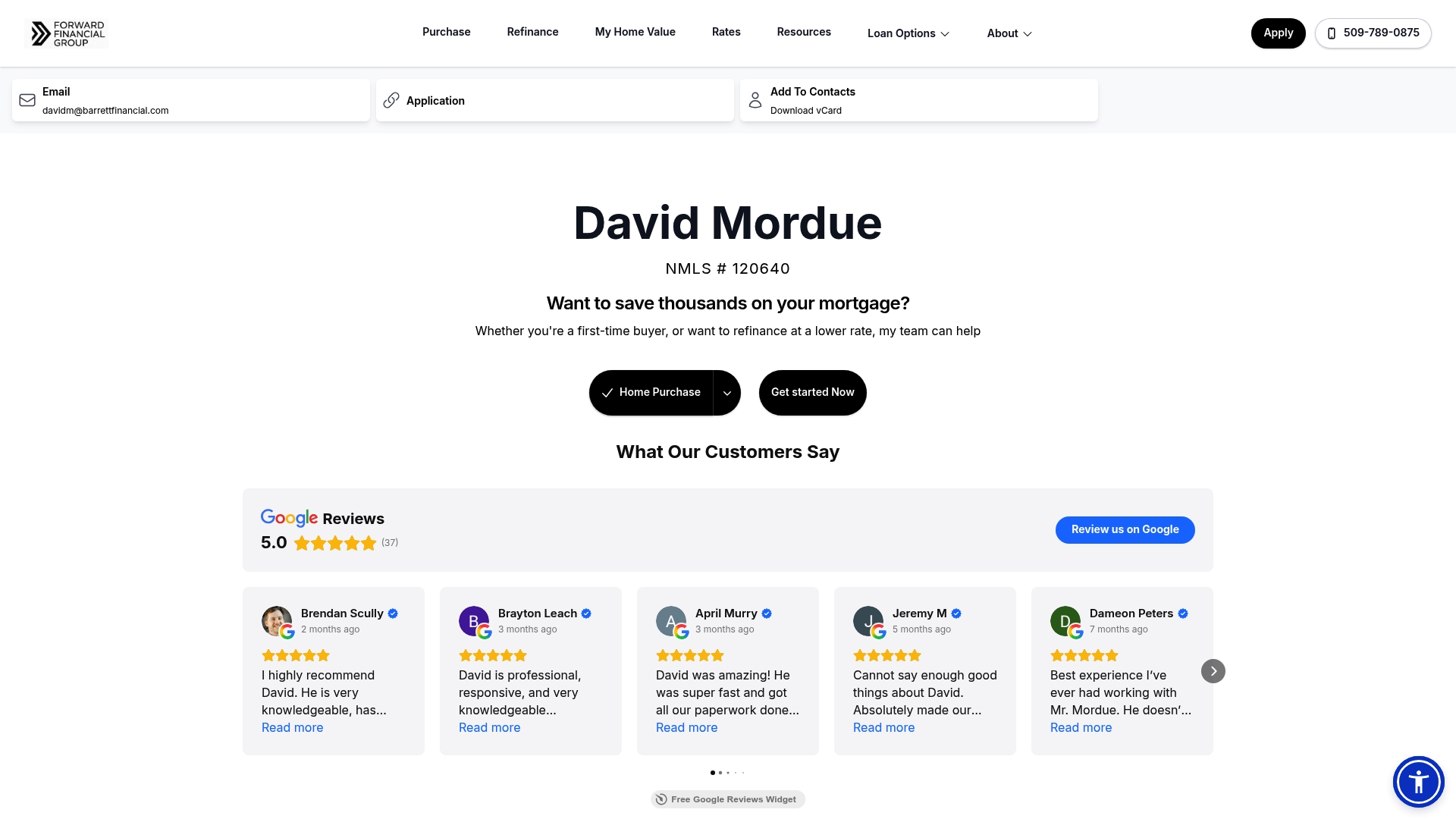
Whether you’re exploring a HELOC, considering a cash-out refinance, or weighing both against your current mortgage terms, a short consultation can clarify which option actually saves you money. We’ll review your credit, your equity position, and your income documentation, then match you with competitive offers instead of leaving you to compare rate sheets on your own.
Start by visiting Davidmordue to see your options, or use our refinance calculator to compare a HELOC against a full refinance before you decide.
This article is general information, not a substitute for advice from a qualified financial advisor. Consult a qualified financial professional about your own circumstances before acting on anything here.
Sources
- Publication 936 (Home Mortgage Interest Deduction)
- HPML appraisal rule compliance guide — CFPB
- What is a home equity line of credit (HELOC)? — ConsumerFinancialProtection.gov
FAQ
What disqualifies you from getting a HELOC?
A credit score well below the 620 to 680 range, insufficient equity under typical 80% to 85% CLTV limits, or a debt-to-income ratio above the common 43% guideline can each disqualify you, according to ConsumerFinance.gov. Inconsistent income or an appraisal that comes in lower than expected can also derail an application.
How much is the monthly payment on a $100,000 HELOC?
Payment amount depends on your rate and whether you’re in the interest-only draw period or the amortizing repayment period, so there’s no single fixed figure. Use a HELOC calculator with your actual rate and balance to estimate your specific payment.
What happens after 10 years on a HELOC?
Most HELOCs move from the draw period into the repayment period around the 10-year mark, which typically shifts payments from interest-only to full principal and interest, as outlined in the CFPB’s HELOC brochure. Many borrowers refinance or convert to a fixed-rate loan around this point to manage the higher payment.
What is required to qualify for a HELOC?
You generally need a credit score in the 620 to 680 range or higher, a home equity share typically around 15 to 20 percent, and a debt-to-income ratio near or below 43%, along with documented income and a qualifying appraisal. Lenders also require proof of homeowner’s insurance and a clean mortgage payment history before approval.