
Conditional loan approval is an official mortgage status in which a lender's underwriter intends to approve your loan once you satisfy a specific set of documented requirements. It sits between pre-approval and final approval in the conditional loan approval process, confirming you meet the core lending criteria while flagging outstanding items that must be resolved before closing. This status is a strong positive signal. It is not, however, a guarantee of funding. Understanding what it means, what comes next, and how to avoid common pitfalls will help you move from conditional approval to clear to close with confidence.
What is conditional loan approval and how does it work?
Conditional loan approval is defined as the underwriter's formal assessment that your loan meets lender guidelines subject to resolving specific outstanding verifications. The underwriter has reviewed your credit, income, assets, and the property, and found the file largely acceptable. What remains are targeted conditions that must be cleared before the lender issues final approval.
This status occurs during the underwriting phase, which is the most thorough review in the entire mortgage process. The underwriter is not simply checking whether you earn enough. They are confirming that every element of your financial profile aligns with the loan program's requirements. Conditional approval tells you the review is nearly complete and the path forward is clear, provided you respond correctly.

The term "conditional approval" is the standard industry phrase used by lenders, Fannie Mae guidelines, and federal regulators. You may also see it labeled as "approved with conditions" on your loan estimate or in lender communications. Both phrases refer to the same status.
What conditions do lenders typically require?
Common conditions include additional documentation and third-party verifications that the underwriter needs to finalize the file. These conditions vary by loan type, borrower profile, and property, but most fall into predictable categories.
Documentation conditions borrowers commonly receive:
Updated bank statements confirming current account balances and the source of your down payment funds
Gift letters if any portion of your down payment comes from a family member, with supporting transfer documentation
Employment verification such as a recent pay stub, a written verification of employment from your employer, or a signed tax transcript from the IRS
Homeowners insurance proof showing the policy is active and names the lender as a loss payee
Appraisal completion confirming the property's market value supports the loan amount
Title verification clearing any liens, ownership disputes, or title defects on the property
Explanations for credit inquiries or employment gaps that appeared during underwriting review
An appraisal condition deserves special attention. If the appraised value comes in below the purchase price, you face an appraisal gap. You may need to renegotiate the price with the seller, cover the difference in cash, or request a second appraisal. This is one of the most common reasons conditional approvals stall.
Pro Tip: Ask your lender for a complete written list of every condition at the time of conditional approval. Verbal summaries miss details. A written list lets you check off each item and submit everything in one organized package, which reduces back-and-forth delays.
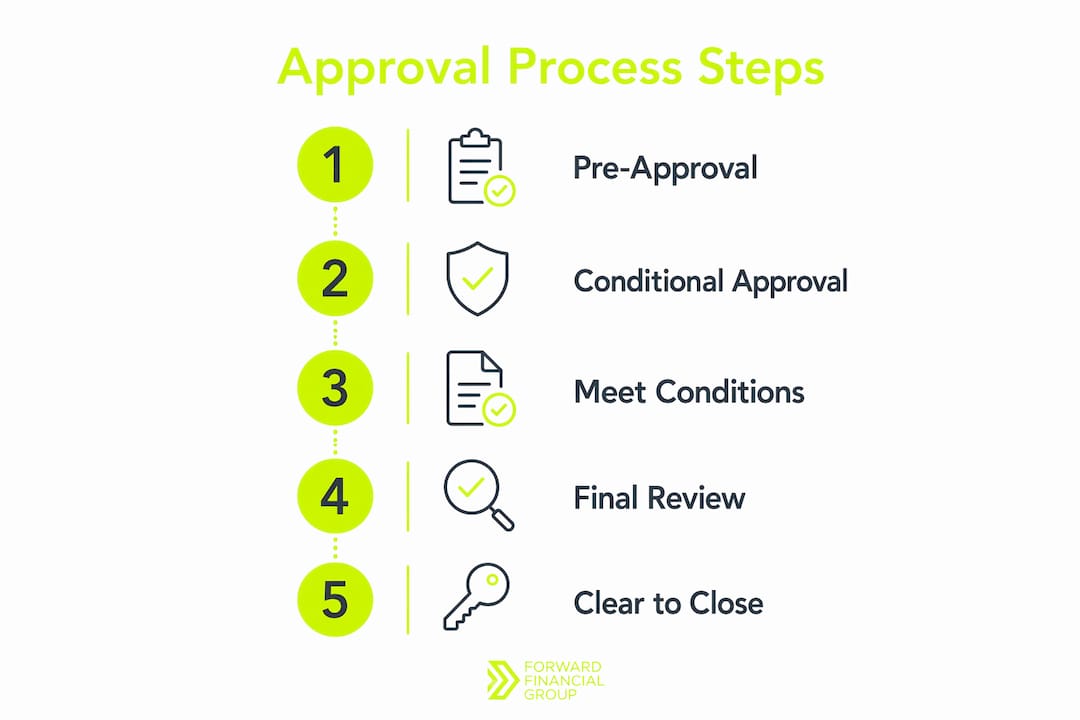
Conditional loan approval vs final approval: what is the difference?
The three stages of mortgage approval serve distinct purposes and carry very different levels of certainty. Borrowers who treat conditional approval as final approval often make costly mistakes, such as booking movers or giving notice on a rental before the loan is fully cleared.
Stage | When it happens | Documentation reviewed | Certainty level |
|---|---|---|---|
Pre-approval | Before you make an offer | Self-reported income, credit pull, basic assets | Low to moderate |
Conditional approval | During underwriting | Full financial file, property appraisal, title | High, pending conditions |
Final approval (clear to close) | After all conditions are met | Verified and confirmed complete file | Full lender sign-off |
Pre-approval is a preliminary lender estimate based largely on what you report. The lender has not yet verified every document. Conditional approval happens after a deeper file review during underwriting, where the lender confirms your eligibility but flags specific items still needed. Final approval, or clear to close, is the lender's full sign-off after every condition is satisfied. Only at that point is your loan ready to proceed to the closing table.
The practical difference matters. A pre-approval letter strengthens your offer. A conditional approval means your loan is in active underwriting. A clear to close means you can schedule your closing date with confidence.
What is the timeline from conditional approval to closing?
The time from conditional approval to final closing typically takes about 1–2 weeks, depending largely on how fast you provide requested documents and how quickly third parties complete their work. That range assumes no major complications arise.
Here is how the process typically unfolds after you receive conditional approval:
Receive your conditions list. Your loan officer sends a formal list of outstanding items. Read it carefully and ask for clarification on anything unclear before you start gathering documents.
Gather and submit documents promptly. Every day you wait adds to your timeline. Prioritize items you control directly, such as bank statements, pay stubs, and insurance proof.
Address third-party conditions. Appraisal, title work, and employer verification depend on outside parties. Contact your appraiser, title company, and HR department early to confirm timing.
Underwriter reviews submitted conditions. Once you submit documents, the underwriter reviews them. If anything is incomplete or formatted incorrectly, they will issue a new condition request, restarting that review cycle.
Receive clear to close. When all conditions are satisfied, the underwriter issues the clear to close. Your lender then prepares the closing disclosure, which you must receive at least three business days before closing.
Attend closing and fund the loan. You sign final documents, pay closing costs, and the lender funds the loan. At David Mordue - Forward Financial Group, the entire process from application to funding can be completed in less than 21 days.
Delays primarily come from document turnaround and third-party verifications, not from the underwriter's review time. The fastest path forward is treating each condition as an immediate task rather than something to address when convenient.
What risks and pitfalls should you watch for during conditional approval?
Conditional approval is not a guarantee. Your loan can be denied after conditional approval if conditions go unmet or if your financial situation changes during underwriting. This is the most misunderstood aspect of the conditional approval stage.
Common mistakes that delay or deny final approval:
Taking on new debt. Opening a new credit card, financing a car, or making a large purchase on credit changes your debt-to-income ratio. Underwriters recheck your financial profile during the conditional stage. New debt can trigger further scrutiny or outright denial.
Making large or unexplained bank deposits. A sudden large deposit raises questions about undisclosed debt or gift funds. Every significant transaction must be documented and sourced.
Changing jobs. Switching employers, going from salaried to self-employed, or accepting a commission-based role during underwriting can invalidate your income documentation entirely.
Submitting incomplete or ambiguous documents. Lenders may reject near-match documents requiring resubmission, which extends the timeline unnecessarily. A bank statement missing a page, or a letter without a signature, will come back to you.
Ignoring lender communications. Unanswered emails or phone calls from your loan officer create delays that compound quickly, especially when closing deadlines are fixed.
Pro Tip: Do not make any financial moves during the conditional approval period without first consulting your loan officer. Even a well-intentioned action, like paying off a credit card with a large cash withdrawal, can raise flags that require explanation and documentation.
A key misconception is treating conditional approval as guaranteed approval. Underwriting conditions and financial changes can still derail the loan. Staying financially stable and responsive throughout this period is the single most effective way to protect your approval.
Key Takeaways
Conditional loan approval confirms your mortgage is on track but requires you to satisfy specific lender conditions before the underwriter issues a clear to close and your loan can fund.
Point | Details |
|---|---|
Definition of conditional approval | An underwriter's formal assessment that your loan is likely approved pending specific documented conditions. |
Common conditions required | Bank statements, employment verification, appraisal, homeowners insurance, and title clearance are typical. |
Conditional vs final approval | Final approval (clear to close) only comes after every condition is fully satisfied and verified. |
Typical timeline | The process from conditional approval to closing generally takes about 1–2 weeks based on document speed. |
Biggest risk | New debt, job changes, or incomplete documents can cause denial even after conditional approval is issued. |
What I have learned from watching borrowers navigate conditional approval
Working with homebuyers at David Mordue - Forward Financial Group, I have seen one pattern repeat itself more than any other. Borrowers receive their conditional approval letter, feel relieved, and then slow down. They assume the hard part is over. That assumption is where deals fall apart.
The conditional approval stage is actually where your active participation matters most. The underwriter has done their initial work. Now the clock is running, and every day without a response from you is a day added to your closing timeline. In a competitive market, that delay can cost you the home.
What I tell every borrower is this: treat your conditions list like a work assignment with a hard deadline. Read each item carefully. If anything is unclear, call your loan officer the same day and ask for specifics before you start gathering documents. Submitting the wrong version of a document wastes a week. Submitting the right one the first time keeps you on schedule.
The other thing I have noticed is that borrowers underestimate third-party delays. You can submit your bank statements in an hour. Getting an appraisal scheduled, completed, and reviewed takes days. Getting employer verification from a large HR department can take even longer. Start those requests the moment you receive your conditions list. Do not wait until your personal documents are ready.
Conditional approval is genuinely good news. It means the underwriter believes in your file. Your job from that point forward is to give them every reason to confirm that belief.
— David Mordue
How David Mordue - Forward Financial Group can help you reach clear to close
Navigating the conditional approval stage is much easier when you have an experienced mortgage broker in your corner. David Mordue - Forward Financial Group offers a fully online application process that keeps your file organized and your loan officer accessible at every step.

Whether you are a first-time homebuyer working through your first underwriting experience or a homeowner looking to refinance, the team at David Mordue - Forward Financial Group provides personalized guidance to help you respond to conditions quickly and accurately. Use the mortgage pre-approval service to start your file with a complete, verified application that reduces conditions from the outset. You can also use the rent vs buy calculator to confirm your purchase decision is financially sound before you reach underwriting. With funding possible in less than 21 days, timing is never a barrier when you work with the right team.
FAQ
What does conditional loan approval mean?
Conditional loan approval means a lender's underwriter has reviewed your mortgage file and intends to approve the loan once you satisfy specific remaining requirements. It is a strong positive indicator but not a final guarantee of funding.
How long does conditional approval take to become final approval?
The process from conditional approval to final approval typically takes about 1–2 weeks. The timeline depends on how quickly you submit requested documents and how fast third parties like appraisers and title companies complete their work.
Can a loan be denied after conditional approval?
Yes. A loan can be denied after conditional approval if required conditions are not met or if your financial situation changes. Taking on new debt, changing jobs, or submitting incomplete documents are common reasons for denial at this stage.
What is the difference between conditional approval and clear to close?
Conditional approval means your loan is approved pending specific conditions. Clear to close means every condition has been satisfied and the lender has given full sign-off. Only a clear to close allows you to schedule and complete your loan closing.
What should you avoid doing during conditional loan approval?
Avoid taking on new debt, making large unexplained bank deposits, changing jobs, or making major financial decisions without consulting your loan officer. Any of these actions can change your financial profile and trigger additional underwriting scrutiny or denial.