
No, earnest money is not the same as your down payment. Earnest money is a smaller, good-faith deposit you submit with your offer, while the down payment is a much larger sum paid at closing. According to the National Association of Realtors, earnest money is standard practice that protects sellers, and it’s typically credited back toward your down payment or closing costs once the sale closes.
TL;DR:
- Earnest money usually ranges from 1% to 3% of the purchase price and is refundable only if contingencies like inspection or financing are met and deadlines are honored.
- The deposit is held by a neutral third party, such as an escrow or title company, and must be explicitly named and verified in your purchase contract.
- At closing, the earnest deposit is credited toward your down payment or closing costs, reducing the amount you need to pay out of pocket.
- Larger deposits can strengthen your offer but also increase risk if contingencies or deadlines are not properly managed.
- Coordinating timely deposit, financing, and closing processes is critical, and a mortgage broker can help ensure these steps are aligned to protect your earnest money.
Table of Contents
- What Is Earnest Money? Definition and Who Holds It
- What Is a Down Payment? Definition and Lender Requirements
- Earnest Money vs Down Payment: A Side-by-Side Look
- How Earnest Money Refundability Actually Works
- How Much Is Earnest Money, Really?
- How Earnest Money Gets Applied at Closing
- Protecting Your Earnest Money: A Practical Checklist
- A Broker’s Role in Timing Your Deposit and Closing
- Why the Standard Advice on Earnest Money Falls Short
- Get Help Coordinating Your Deposit and Closing Timeline
- Sources
- FAQ
What Is Earnest Money? Definition and Who Holds It
Earnest money is a good-faith deposit you submit with, or shortly after, your accepted purchase offer. It tells the seller you’re serious, and it protects them from taking their home off the market for a buyer who walks away without cause. The NAR notes this deposit isn’t legally required in most states, but it’s common practice precisely because sellers want that financial signal before they stop showing the property to anyone else.
The funds typically sit with a neutral third party, not the seller directly. That means an escrow company, a title company, or occasionally a real estate attorney’s trust account.
- Confirm the holder in writing. Your purchase contract should name the exact escrow or title company holding your deposit.
- Pay by check or wire. Avoid cash, and ask your agent for the holder’s official payment instructions before sending anything.
- Get a receipt. A reputable escrow holder will confirm receipt of your funds within a day or two.
What Is a Down Payment? Definition and Lender Requirements
A down payment is the portion of the purchase price you pay upfront in cash, reducing how much you need to borrow. Lenders care about this number because it lowers their loan-to-value ratio and their exposure if you default.
Down payment requirements vary by loan program:
- Conventional loans: commonly 3% to 20%, though 20% avoids private mortgage insurance
- FHA loans: as low as 3.5% with qualifying credit, detailed on our FHA loans page
- VA loans: often 0% down for eligible veterans and service members
Your down payment is paid at closing, not with your offer, and its size directly affects your monthly payment and whether you’ll carry PMI.
Earnest Money vs Down Payment: A Side-by-Side Look
The core distinction comes down to purpose, timing, and what happens to the money afterward.
| Feature | Earnest Money | Down Payment |
|---|---|---|
| Purpose | Shows good faith to the seller | Reduces loan amount, lowers lender risk |
| Timing | Paid with the offer | Paid at closing |
| Typical size | 1% to 3% of price | 3% to 20%+ of price |
| Who holds it | Escrow or title company | Applied directly at closing |
| Refundable? | Yes, if contingencies apply | Not applicable, it’s your equity |
| Applied at closing? | Yes, credited toward down payment/costs | N/A, it is the payment |
On a $400,000 home, earnest deposits are commonly around 1% to 3% of the price, while down payments typically range from 3% to 20% or more. At closing, that $8,000 earnest deposit doesn’t disappear. It’s subtracted from the $40,000 you owe, so you’d bring $32,000 plus closing costs to the table instead of the full $40,000.
How Earnest Money Refundability Actually Works
Earnest money is refundable, but only under specific conditions. It comes down to contingencies written into your contract and whether you meet their deadlines.
- Inspection contingency. Lets you cancel and recover your deposit if a home inspection reveals serious problems.
- Financing contingency. Protects you if your loan falls through despite good-faith effort to secure it.
- Appraisal contingency. Covers situations where the home appraises below the agreed sale price.
- Title contingency. Applies if a title search turns up liens or ownership disputes.
Deadlines matter more than most first-time buyers realize. Redfin’s guidance on earnest money makes clear that missing a contingency deadline, even for a legitimate delay, can cost you the deposit unless you secure a written extension first. When a buyer cancels properly, both parties usually sign a mutual release form authorizing the escrow holder to return the funds.
Pro Tip: Never rely on a verbal agreement to extend a deadline or release your deposit. Get every extension and release in writing before the clock runs out.
How Much Is Earnest Money, Really?
Earnest money typically runs 1% to 3% of the purchase price, though it can climb toward 10% in fiercely competitive markets where buyers use a larger deposit to stand out. Experian’s overview of earnest money confirms that 1% to 3% range as the norm nationally, while down payments run anywhere from 3% to 20% or more depending on your loan.
On a $400,000 house, typical earnest money falls in the 1% to 3% range, and down payments generally range from 3% to 20% or more.
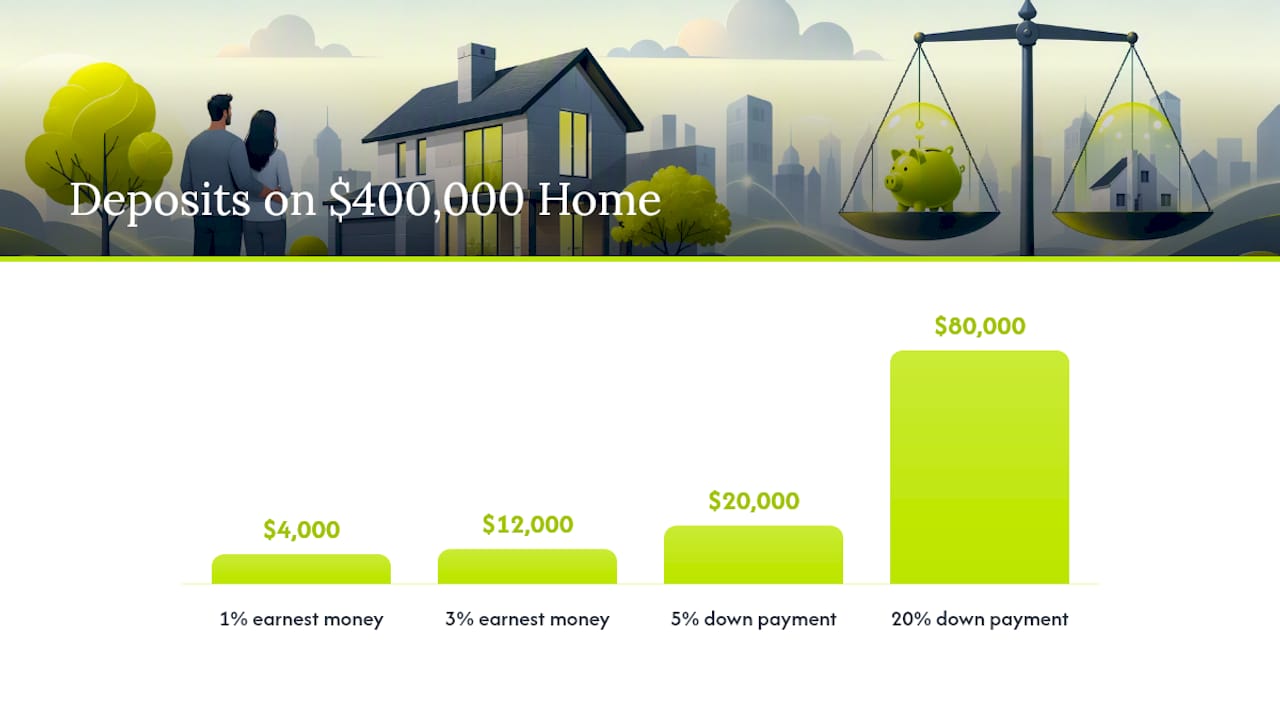
Is $20,000 a good down payment on a $400,000 house? That’s 5%, which qualifies for several conventional loan programs but usually means you’ll pay PMI until you build more equity. A larger earnest deposit can make your offer look stronger to a seller, but it also raises your exposure if something goes wrong before closing.
How Earnest Money Gets Applied at Closing
Your title or closing agent handles the paperwork that moves earnest money from escrow into your transaction. On closing day, that deposit gets credited toward your down payment or your closing costs, whichever your contract specifies.
Before you sign anything, check your closing disclosure for:
- A line item showing your earnest money credit
- The final cash-to-close figure, which should already reflect that credit
- Confirmation that the amount matches what you originally deposited
Ask your closing agent for an itemized statement if the credit isn’t obvious. A five-minute question here can catch an error before it becomes a headache after you’ve signed.
Protecting Your Earnest Money: A Practical Checklist
Balancing a competitive offer against deposit safety takes some planning, but it’s manageable if you follow a few rules.
- Name the escrow holder explicitly in your purchase contract.
- Include contingencies with clear, dated deadlines, not vague language.
- Document every extension request and approval in writing.
- Require a signed mutual release before expecting your refund if you cancel.
- Consider a smaller deposit paired with stronger contingencies if you’re risk-averse.
Offering a larger deposit or shorter contingency windows can make your offer more attractive in a hot market, but it raises your risk if plans change. Avoid handing money directly to a seller or agent, and never pay with an account you can’t verify clears in time.
Pro Tip: If a seller’s agent asks you to wire funds to an unfamiliar account, call the title company directly to confirm before sending anything. Wire fraud targeting earnest money deposits is a real and growing risk.
A Broker’s Role in Timing Your Deposit and Closing
Coordinating earnest money, financing contingencies, and closing dates takes more juggling than most first-time buyers expect. A mortgage broker can speed up preapproval and keep your lender and title company working on the same timeline, which helps you avoid missing a deadline that could put your deposit at risk. A mortgage broker can offer a fully online application, rate comparisons, and personalized consultations designed to keep those moving parts aligned from offer to closing.
Why the Standard Advice on Earnest Money Falls Short
Most guides treat earnest money like a formality, a box to check between your offer and your mortgage application. That undersells what it actually does. Your deposit is a negotiating tool as much as a good-faith gesture, and how you structure it says something to the seller about how serious and how risk-tolerant you are.
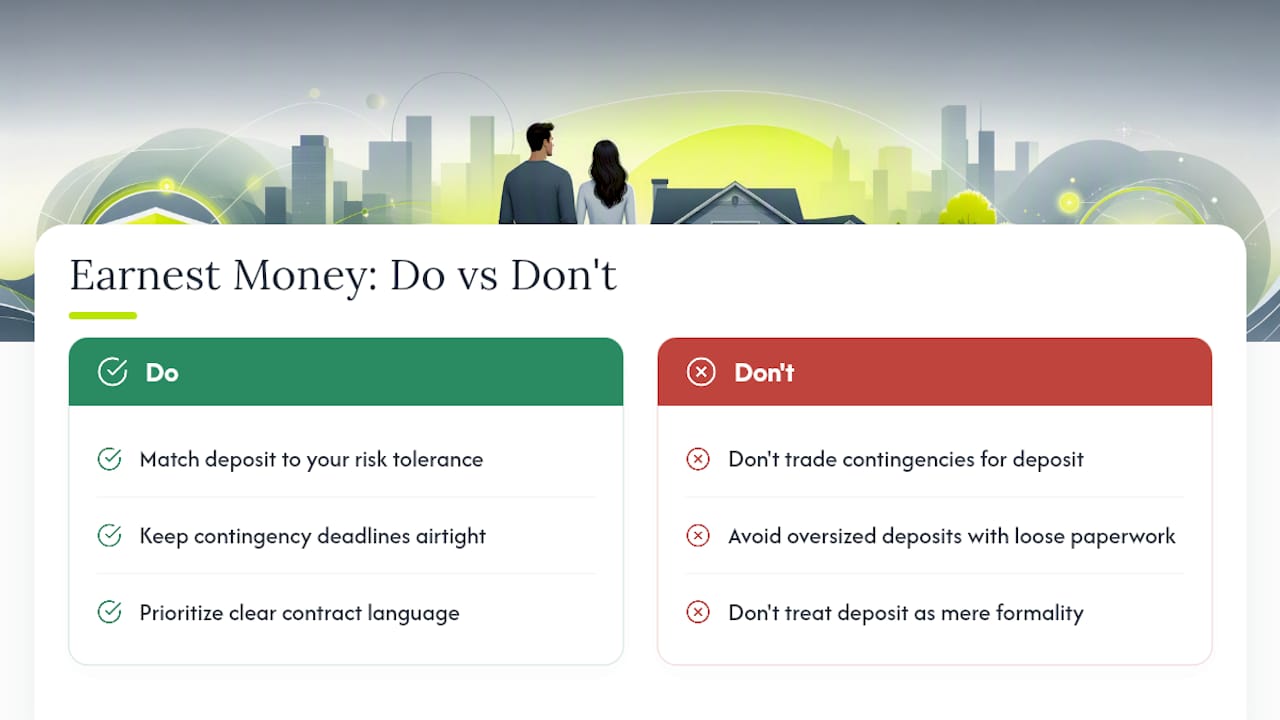
The conventional wisdom pushes buyers toward bigger deposits and shorter contingency windows to win competitive offers. That can work, but it shifts real risk onto you if financing stalls or an inspection turns up something serious. The buyers who come out ahead aren’t the ones who threw the biggest deposit at a seller. They’re the ones who matched their deposit size to their actual risk tolerance and kept their contingency deadlines airtight.
If you take one thing from this article, prioritize the paperwork over the dollar amount. A smaller deposit protected by clear contingencies and documented deadlines beats a larger deposit with sloppy contract language every time.
— David Mordue
Get Help Coordinating Your Deposit and Closing Timeline
Timing earnest money, financing approval, and closing dates correctly takes more coordination than most first-time buyers plan for, and a missed step anywhere in that chain can put your deposit at risk. A mortgage brokerage can handle that coordination, offering a fully online loan application, personalized consultations, and rate comparisons built to keep your preapproval and closing timeline moving together.

Whether you’re buying your first home or refinancing an existing one, getting preapproved early gives you a clearer picture of how much down payment you’ll need and how your earnest money fits into that number. Start your application or explore your options at David Mordue - Forward Financial Group to see how quickly you can move from offer to closing.
Sources
- Consumer guide: escrow and earnest money | NAR
- Is earnest money refundable? | Redfin
- What is earnest money? | Experian
FAQ
How Much Is Earnest Money on a $400,000 House?
At the typical 1% to 3% range, earnest money on a $400,000 house is commonly around that percentage, though it can climb higher in a competitive market.
Is Earnest Money Refundable if I Change My Mind?
No, earnest money is only refundable when you cancel under a valid contingency, such as inspection or financing, and meet the deadlines specified in your contract.