
A bank statement mortgage is the right call for most self-employed borrowers whose tax returns understate their real income due to legitimate write-offs. If your deposits tell a stronger financial story than your Schedule C, this product exists precisely for you.
Quick self-assessment checklist:
- Statements required: Most programs ask for 12 or 24 months of personal or business bank statements.
- Down payment and reserves: Expect a minimum of 10%–20% down, plus 3–6 months of reserves in a verified account.
- Credit and DTI: Lenders commonly require a credit score of 620 or higher, with a debt-to-income ratio generally at or below 50%.
Pro Tip: Before you spend time gathering documents, get a preapproval conversation started with a broker who specializes in non-QM products. David Mordue at Forward Financial Group works with self-employed borrowers specifically and can tell you within one conversation whether a bank statement program fits your situation.
Key Takeaways
A bank statement mortgage is the right tool for self-employed borrowers whose deposits reflect stronger income than their tax returns show, but it costs more than conventional financing and should be a considered choice, not a default.
| Point | Details |
|---|---|
| Who it fits | Self-employed borrowers with 2+ years of history and consistent deposits that exceed their documented tax-return income. |
| Documentation required | 12 or 24 months of bank statements, a CPA-prepared P&L, business formation documents, and written explanations for large deposits. |
| Cost tradeoff | Rates typically run 1–3 points above conventional; non-QM status means fewer built-in borrower protections. |
| Try conventional first | Exhaust conventional, FHA, and VA options before committing to a bank statement program, as those paths carry lower rates and stronger protections. |
| Next step | David Mordue - Forward Financial Group offers online preapproval and access to non-QM wholesale programs for self-employed borrowers. |
Table of Contents
- What is a bank statement mortgage, and how does it differ from conventional loans?
- How do lenders calculate your income from bank statements?
- What program types are available, and which one fits your situation?
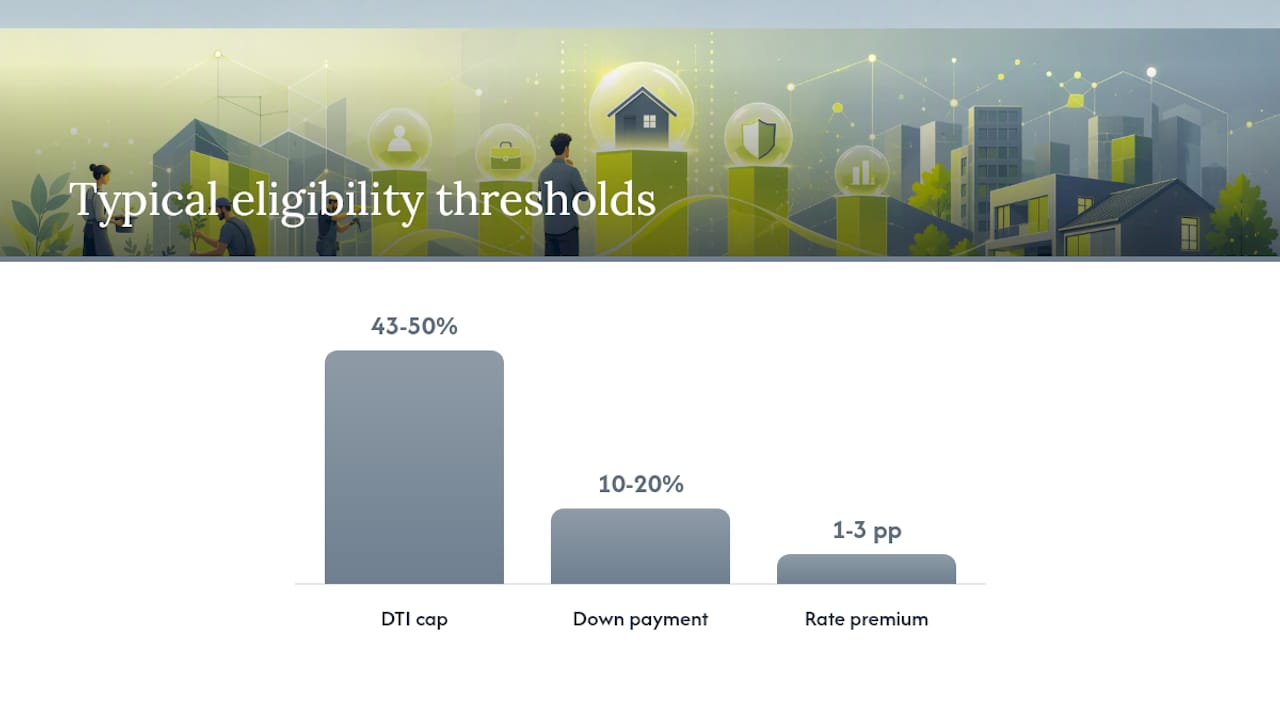
- What eligibility thresholds and costs should you expect?
- Pros and cons: when does a bank statement loan make sense?
- What documents do lenders typically request?
- How does the application process work, and how long does it take?
- What are the alternatives, and when should you choose them?
- How a mortgage broker helps self-employed borrowers find the right program
- When I’d recommend a bank statement loan
- Forward Financial Group can help you get a bank statement mortgage
- Sources
What is a bank statement mortgage, and how does it differ from conventional loans?
A bank statement loan lets self-employed borrowers qualify using 12–24 months of deposit history instead of W-2s or tax returns. The lender analyzes your actual cash flow, not the taxable income your accountant minimized. That distinction matters most for business owners who write off significant expenses and show a modest net income on paper despite healthy revenue.
Conventional mortgages are “qualified mortgages” (QM) under federal rules, meaning they meet specific underwriting standards tied to the Consumer Financial Protection Bureau’s ability-to-repay framework. Bank statement loans are typically non-QM products, which means they sit outside those standards. That gives lenders more flexibility to approve borrowers with nontraditional income, but it also means fewer built-in borrower protections and, usually, higher costs.
Who commonly uses bank statement programs:
- Self-employed professionals and sole proprietors
- Small-business owners with significant deductions
- Freelancers, independent contractors, and gig workers
- Real estate investors with complex income structures
Because non-QM loans carry different protections than government-backed or conventional products, most consumer finance guidance recommends exhausting conventional and FHA/VA options first. If you qualify for a 30-year fixed-rate mortgage through standard underwriting, that path will almost always cost you less.
How do lenders calculate your income from bank statements?
Lenders don’t simply add up every deposit and call it income. They apply a structured methodology, and understanding it helps you estimate your qualifying income before you apply.
The two most common calculation methods:
- 12-month gross deposits: Add all qualifying deposits over the past 12 months. For business accounts, lenders typically apply an expense factor (often 50%–75%) to account for business costs, arriving at a net qualifying income figure.
- 24-month average: Average deposits across 24 months. This smooths out seasonal spikes and is often preferred by lenders when income fluctuates year to year.
Suppose your business account shows $20,000 in average monthly deposits over 12 months.
What counts as an allowable deposit:
- Regular revenue deposits from clients or customers
- Owner draws from a business account to a personal account (counted once, not twice)
- Payroll deposits if you pay yourself a salary
What lenders typically exclude:
- Transfers between your own accounts (flagged as double-counting)
- One-time large deposits without a documented source
- Loan proceeds deposited into the account
Pro Tip: Keep your business and personal accounts completely separate for at least 12 months before applying. Commingled accounts force underwriters to manually sort transfers, which slows approval and can reduce your qualifying income.
What program types are available, and which one fits your situation?
Not all bank statement programs are structured the same way. The right program depends on how long you’ve been self-employed, how consistent your deposits are, and whether you’re buying a primary residence or an investment property.
12-month vs. 24-month programs:
- 12-month programs suit borrowers with strong, recent deposit history who may have had lower income in prior years. They require less documentation but often carry slightly higher rates or stricter credit requirements.
- 24-month programs are preferred by lenders because they show income stability over a longer window. They typically offer better pricing and higher loan amounts for borrowers whose income has been consistent.
Personal vs. business statements:
Using personal bank statements simplifies the calculation because there’s no expense factor to negotiate. Business statements require a profit and loss (P&L) statement prepared by a CPA or licensed accountant to support the expense ratio the lender applies. Some lenders allow a borrower-prepared P&L, but CPA-certified documents carry more weight in underwriting.
Investor and rental property rules:
Real estate investors have a separate path worth knowing. Many lenders prefer a DSCR loan for investment properties, where the property’s rental income covers the debt service rather than the borrower’s personal income. DSCR underwriting is often cleaner for investors than a bank statement approach, particularly when the property generates strong cash flow.
| Program Type | Best For | Key Requirement |
|---|---|---|
| 12-month personal statements | Strong recent income, simple finances | Clean personal account, no commingling |
| 24-month business statements | Consistent business revenue, CPA on file | Certified P&L, 2 years self-employed |
| DSCR investor loan | Rental property buyers | Property cash flow covers debt service |
What eligibility thresholds and costs should you expect?
Common eligibility benchmarks:
- Self-employment history: Most lenders require at least 2 years of self-employment, verified by business formation documents or a CPA letter.
- Credit score: Minimums typically fall in the 620–700 range, though a score above 700 meaningfully improves your rate and reduces required reserves.
- Debt-to-income ratio: Most programs cap DTI at 43%–50%, though some non-QM lenders allow up to 55% with compensating factors like strong reserves.
- Down payment: Expect 10%–20% minimum. Borrowers with lower credit scores or higher DTI are often required to put down more.
- Reserves: Lenders commonly require 3–6 months of mortgage payments in liquid, verified accounts after closing.
Rate and fee expectations:
Bank statement loans carry higher interest rates than conventional mortgages, typically running 1–3 percentage points above prevailing 30-year fixed rates, though the exact spread depends on your credit profile, loan size, and lender. You can view current rate benchmarks to get a sense of where conventional pricing sits before comparing non-QM offers.
Non-QM features to watch for in the loan documents include prepayment penalties (fees for paying off the loan early), balloon payments (a large lump sum due at a set date), and extended terms such as 40-year amortization. These features are not universal, but they appear more often in non-QM products than in conventional loans.
Regulatory note: Because bank statement loans are non-QM, they are not required to meet the same ability-to-repay standards the CFPB applies to qualified mortgages. That means the lender has more flexibility, but you have fewer automatic protections if a dispute arises. Read the loan estimate and closing disclosure carefully before signing.
Pros and cons: when does a bank statement loan make sense?
Advantages:
- Qualifies you on actual cash flow, not tax-return income reduced by deductions
- Accessible to borrowers with 2+ years of self-employment and strong deposit history
- Works for primary residences, second homes, and investment properties
- Loan amounts can reach jumbo territory with the right lender
Disadvantages:
- Higher interest rates than conventional or government-backed loans
- Larger down payment requirements in most programs
- Non-QM status means fewer built-in borrower protections
- Prepayment penalties and non-standard features can increase total cost
When this product unlocks financing:
A business owner who writes off $80,000 in legitimate expenses annually might show $40,000 in net income on their tax return but deposit $120,000 into their business account. A conventional lender qualifies them on $40,000. A bank statement lender qualifies them on the deposit-derived income figure, which can be two to three times higher after the expense factor is applied.
When to look elsewhere first:
If your documented income, even after write-offs, supports a conventional loan, take that path. FHA loans, available through programs like the FHA loan options at Forward Financial Group, offer lower down payments and more borrower protections for eligible buyers.
Pro Tip: Always run a conventional and FHA prequalification before committing to a bank statement program. A broker can do this comparison for you in a single conversation, and the cost difference over a 30-year term can be substantial.
What documents do lenders typically request?
Assembling a complete file before you apply is the single most effective way to speed underwriting. Incomplete packages are the leading cause of delays in non-QM lending.
Core document checklist:
- 12 or 24 months of bank statements (personal, business, or both, depending on the program)
- A profit and loss statement for the current year, ideally CPA-prepared
- Business formation documents (LLC operating agreement, articles of incorporation, or business license)
- Two forms of government-issued ID
- Asset statements for all accounts used to verify reserves and down payment funds
- Written explanations for any large or irregular deposits
- Two years of federal tax returns, if available (not always required, but strengthens the file)
- Mortgage statements or rental agreements for any existing properties
How to present deposits clearly:
For any deposit over roughly $2,500 that isn’t a regular client payment, prepare a one-paragraph written explanation identifying the source. If the deposit came from a business transfer, show the corresponding business account statement to confirm it was already counted there. Lenders will often request annotated explanations for large or irregular deposits, and providing them proactively prevents back-and-forth that can add weeks to your timeline.
Provide bank statements as PDF eStatements downloaded directly from your bank’s portal. Screenshots from a mobile app are often rejected because they can be altered and don’t carry the bank’s official formatting.
How does the application process work, and how long does it take?
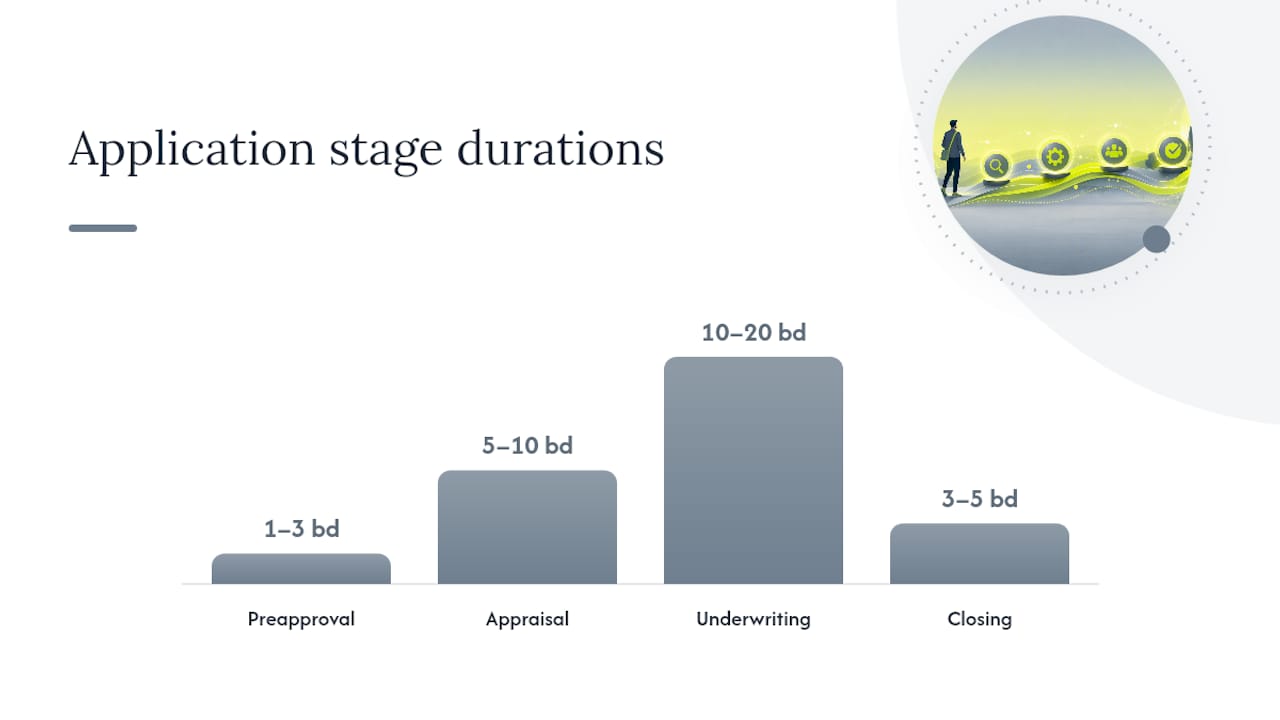
The timeline for a bank statement mortgage is typically longer than a conventional loan because underwriting requires more manual review. Here’s what to expect at each stage.
- Preapproval (1–3 business days): Submit your bank statements, P&L, and basic financial profile. A broker or lender reviews the file and issues a preapproval letter with a qualifying loan amount.
- Property identification and purchase agreement (varies): Once you have a preapproval, you shop for a property. The clock on formal underwriting starts when you have a signed purchase contract.
- Appraisal (5–10 business days): The lender orders an appraisal to confirm the property’s value. Non-QM lenders may use desk appraisals or automated valuation models for some loan types, but a full appraisal is standard for most bank statement programs.
- Underwriting (10–20 business days): This is the most variable stage. The underwriter reviews every deposit, verifies the P&L against the statements, and may issue conditions requesting additional documentation.
- Closing (3–5 business days after final approval): Once all conditions are cleared, the lender issues a clear-to-close and schedules the closing date.
Total estimated timeline: 21–45 days from preapproval to closing, depending on how complete your file is and how quickly you respond to conditions.
Common underwriting delays and how to avoid them:
- Unexplained deposits: Provide written explanations upfront for any non-recurring deposit.
- Missing P&L: Have a CPA-prepared P&L ready before you apply, not after the lender asks.
- Reserve verification: Keep closing funds in a single, stable account for at least 60 days before applying. Large recent transfers raise questions.
Pro Tip: A broker who packages your file correctly before submission can cut underwriting time significantly. Lenders prioritize complete, well-organized files, and a broker who knows the lender’s specific checklist can get your file to the front of the queue.
What are the alternatives, and when should you choose them?
A bank statement loan is one path, not the only path. Before committing, consider whether one of these alternatives fits your situation at a lower cost.
- Conventional loans: If your documented income qualifies you, a conventional mortgage offers lower rates, more borrower protections, and no non-QM risk features. Run this option first.
- FHA loans: Lower down payment requirements (as low as 3.5%) and more flexible credit standards make FHA programs worth checking if your credit score is in the 580–680 range. HUD’s official resources clarify eligibility and program differences.
- VA loans: If you’re a veteran or active-duty service member, a VA loan offers no-down-payment financing with strong borrower protections and no private mortgage insurance.
- Portfolio loans: Some community banks and credit unions hold loans on their own books and underwrite them manually, which can accommodate self-employed borrowers without the non-QM premium.
- DSCR loans: For investment properties, a DSCR loan qualifies you based on the property’s rental income rather than your personal income, often at better terms than a bank statement program.
The refinance strategy: If your business is growing and your documented income will be stronger in 12–18 months, consider taking a bank statement loan now and planning to refinance into a conventional product once your tax returns reflect higher income. Use the refinance calculator to model what that future payment could look like.
How a mortgage broker helps self-employed borrowers find the right program
Self-employed borrowers face a narrower lender market than W-2 employees. Most retail banks don’t offer bank statement programs at all, and the non-QM lenders who do have widely varying requirements, expense factors, and pricing. A mortgage broker with non-QM experience gives you access to that wholesale market in a way you can’t replicate on your own.
What a broker does for you:
- Shops your file across multiple non-QM wholesale lenders simultaneously
- Matches you to the 12-month or 24-month program that maximizes your qualifying income
- Formats your bank statements and P&L to meet each lender’s specific documentation standards
- Drafts deposit explanation letters that satisfy underwriting requirements
- Negotiates pricing and surfaces lender flexibilities that aren’t advertised publicly
Before you share financial documents with any broker or lender, verify their licensing. The NMLS Consumer Access database is the official public lookup for mortgage company and loan officer licensing. A licensed broker is legally required to act in your interest and disclose their compensation.
Broker compensation on non-QM loans is typically paid by the lender as a yield spread premium, or by the borrower as an origination fee, or both. A transparent broker discloses this clearly on the loan estimate before you commit.
David Mordue at Forward Financial Group works with self-employed borrowers and has access to non-QM wholesale programs. The fully online application process means you can start a preapproval conversation and submit documents without visiting an office, which matters when you’re running a business and time is limited.
When I’d recommend a bank statement loan
The case for a bank statement mortgage is strongest when two conditions are true simultaneously: your deposit history shows consistent, meaningful cash flow, and your tax returns significantly understate that income due to legitimate deductions. If both apply, you’re exactly the borrower this product was designed for.
Where I’d urge caution is when borrowers treat a bank statement loan as a shortcut rather than a last resort. The rate premium is real, and over a 30-year term, even a 1.5-percentage-point difference in rate translates to tens of thousands of dollars in additional interest. The right sequence is always to check conventional eligibility first, then FHA or VA if applicable, and only then turn to a bank statement program.
The other scenario worth flagging: borrowers who are 12–18 months into a business with strong deposits but limited history. Some lenders will work with 12 months of self-employment, but the pricing is less favorable and the approval is less certain. If you can wait another year and build a stronger documented track record, the loan you qualify for will cost you less.
The practical next step is straightforward. Gather 12 months of bank statements and a current P&L, then have a conversation with a broker who can run both a conventional and a bank statement prequalification side by side. That comparison tells you exactly what each path costs and which one you can actually close.
Forward Financial Group can help you get a bank statement mortgage
Self-employed borrowers who’ve been turned away by traditional lenders often assume the problem is them. Usually, it’s the product. David Mordue at Forward Financial Group specializes in matching self-employed buyers and business owners to non-QM programs, including bank statement loans, through a fully online process that can reach funding in under 21 days.
The brokerage compares wholesale non-QM lenders on your behalf, formats your documentation to each lender’s standards, and presents you with a clear side-by-side of your options, including rate, fees, and total cost. Broker compensation is disclosed upfront on your loan estimate, with no surprises at closing.
If you’re ready to find out what you qualify for, start your preapproval with David Mordue today. You can also use the conventional affordability calculator to benchmark what a standard loan would cost before comparing it to a bank statement program.
Sources
- What Is a Bank Statement Loan? - Experian
- Bank Statement Loan: What It Is And Who It’s For | Bankrate
- NMLS Consumer Access
- U.S. Department of Housing and Urban Development (HUD)
This article is general information, not a substitute for advice from a qualified financial advisor. Consult a qualified financial professional about your own circumstances before acting on anything here.